ADAS crop physiologists Sarah Kendall and Tamara Fitters provided guidance on how to complete a thorough ‘Review’ at the end of the season.
We looked at approaches such as grain nutrient analysis, benchmarking, and nutrient balancing, and how these can help farmers and advisors determine if nutrient uptake was deficient or sufficient, as well as calculate accurate off-takes.
We also explained how to use this information as the basis for next year’s nutrient plan.
Sarah and Tamara were joined by farmer Michael Brewis (Scottish Borders), who has been part of NUTRI-CHECK NETs Crop Nutrition Clubs, and Michael’s agronomist, Jackie Cotton from JQC Consultants Ltd.
Watch the webinar
About the NUTRICHECK-NET project
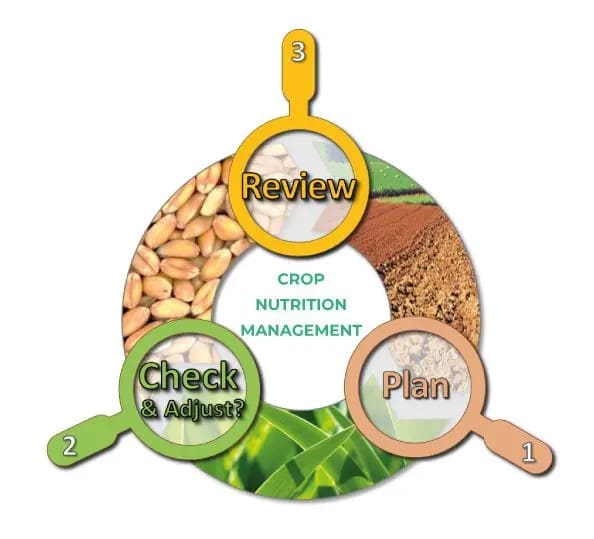
Crop nutrition management requires urgent transformation to reduce costs and pollution as well as to secure future food production. The NUTRI-CHECK NET project has developed a 3-step approach to support farmers in ‘checking’ their crops’ nutritional performance:
- Plan
- Check and adjust
- Review
This webinar is the second in a series of three about crop nutrition.
- First webinar – Optimising crop nutrition through in-season ‘checks’ and ‘adjustments’ – watch here.
- Third webinar – Optimising crop nutrition through dynamic planning – watch here