
Ensuring compliant and efficient silage clamps
For any farmer, an Environmental Agency (EA) farm inspection can be a stressful, daunting, and potentially costly experience
With the number of EA inspections on the rise, particularly in regions with potential water quality issues, ADAS agricultural consultant Eoin Murphy takes a look at a common point of failure – silage clamps.
The CLA estimates that of the 4000 EA inspections that took place last year, nearly half (49%) of the farms inspected were non-compliant with at least one regulation. It’s an alarming but not particularly surprising statistic given the myriad of regulations that farms are now expected to adhere to. Regulation compliance is a complicated task to stay on top of but there seems to be a common point of failure regularly cited by EA inspectors – poorly built or maintained silage clamps.
Silage clamps built pre-1991 are exempt from SSAFO regulations but of those built post-1991, the EA found 40% were non-compliant in 2023/2024. The common reasons have tended to be:
- a lack of external perimeter drains
- damaged concrete floors – especially on front aprons
- unadequate effluent collection, including effluent tanks and slurry stores
- use of earth banked walls
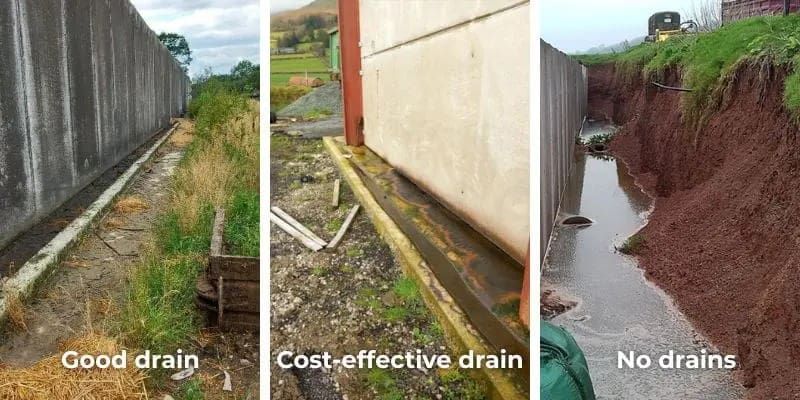
The environmental risks of a non-compliant clamp
The regulations exist for good reason. Leaking silage effluent is an extremely potent pollutant, over 200 times more harmful than raw domestic sewage. Even minimal amounts entering waterways can cause significant environmental damage. Given that EA inspectors are casting a particularly critical eye here, it’s best not putting a repair job or upgrade on the backburner for too long.
As well as lowering pollution risks, a properly constructed clamp will significantly reduce feed wastage and minimise wear on expensive farm machinery.
Weighing up the environmental damage of getting it wrong and the benefits of getting it right, it’s worth ensuring your silage clamp is compliant, ideally before the EA inspector calls so there’s the added peace of mind too.