
Post-harvest trials to reduce crop loss
Preventing food waste within the supply chain
Every year, 1.3 billion metric tonnes of food are produced for global human consumption. A third of it never reaches the consumer’s plate. In developing countries, food waste can be up to 50%. Even in developed countries with a ‘cool chain’, post-harvest losses can still range from 4–8%. To achieve the UN’s Sustainable Development Goal 12, we must halve global food waste by 2030.
Cooling is not the complete answer to post-harvest product loss. Any new solutions should be non-chemical, energy-efficient and cost-effective to meet demands for safe, nutritious and affordable food.
At ADAS, our goal is to develop and trial new solutions to help businesses increase their productivity by reducing food waste. We work with stakeholders across the supply chain from primary production through to retail and act as an essential link between industry and the research community.
Resources

From plant to plate: Methods for post-harvest management of fresh produce
Ripening suspension
The ability to suspend ripening is key to being able to smooth out the peaks and troughs of grower supply to meet consumer demand. It works effectively in commercial supply chains and can extend shelf life for up to seven days compared with cool chain alone.
To suspend ripening, we use air purification to remove ethylene, a key ripening hormone produced by plant tissues. To monitor produce condition while in storage, small microelectronics are placed with the produce to measure real-time key environmental factors. This real-time data can be used to develop algorithms to predict remaining shelf life.
The technology can be low energy and cost-effective. It’s especially useful for extending shelf life in higher climates. We have previously used ripening suspension to extend the freshness of cut flowers in Kenya and the shelf life of tomatoes in Nigeria.
Get in touchPest and disease management
Our experienced horticultural consultants can investigate post-harvest losses caused by crop disease, pest and physiological/nutritional problems in ornamental and edible crops. After we’ve diagnosed the underlying causes, we can recommend treatment and advise on a mitigation strategy.
Get in touchOur post-harvest and product development facility
Our crop storage research facility near Cambridge can host commercial and experimental research trials for all types of fresh produce, including flowers and potatoes.
It allows us to continuously monitor produce condition and to test out new methods to reduce wastage.
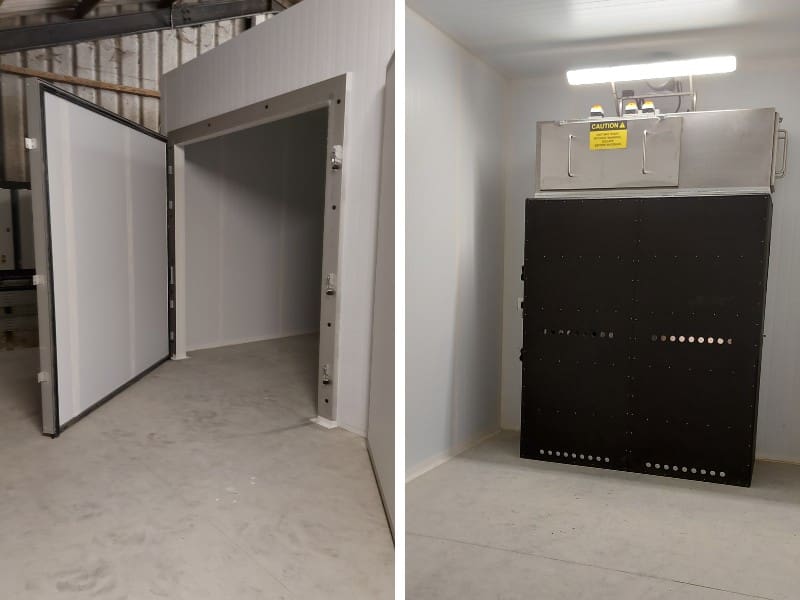
- Three crop storage research rooms, with a capacity of about 6 tonnes and temperature and humidity control
- Air purification for ethylene scrubbing
- Temperature fluctuation and air purification test units
- Secure storage and testing facility
- Small-scale crop storage trials to understand the effects of different atmospheric conditions on post-harvest quality of the crops
In the past, our facilities have been used to:
- test the relationship between crop management and storage characteristics, such as:
- varietal choice
- crop agronomy, including pest and disease management
- at and post-harvest treatments including shelf life and controlled atmosphere storage research
- test and develop sensors, tags and bioindicators for produce quality management
- assess the impact of packaging choice
- develop innovative methods for post-harvest control of microbial decay and spoilage
- minimise losses within the food system by controlling the fundamental biology that influences food storage and shelf life.
Training and support
Outside research, as a specialist supply chain consultancy for post-harvest technologies and control of pathogens, we can support food and drink businesses with:
- independent auditing of processes and operations
- developing post-harvest best practice manuals
- professional training for commercial companies, supermarkets, suppliers to major retailers, grower groups, packaging suppliers and governmental organisations
- support with research and development funding applications to develop new solutions
- product life cycle carbon footprinting and reduction planning
Helping to prevent food waste
We are open to new project work, both in the UK and internationally.
Speak to our experts